
Discover the importance of brand identity, its key elements, and how a strong brand identity helps businesses build trust, stand out from competitors, and achieve long-term growth.
Introduction
In today’s competitive business environment, creating a successful brand requires more than offering high-quality products or services. Businesses need a strong identity that communicates who they are, what they stand for, and why customers should choose them over competitors. This is where brand identity plays a crucial role.
Brand identity is the visual, emotional, and communicative representation of a business. It helps customers recognize a company, understand its values, and develop a connection with it. From a logo and color palette to brand messaging and customer experience, every element contributes to how a business presents itself to the world.
Whether you are launching a startup, managing a small business, or growing an established company, developing a strong brand identity can help you build credibility, attract customers, and create long-term brand loyalty.
In this blog, we will explore what brand identity means, its key elements, why it is important, and how businesses can build an effective brand identity.
What Is Brand Identity?
Brand identity refers to the collection of visual elements, messaging, values, and experiences that a business uses to present itself to its audience. It represents how a company wants to be perceived by customers and the market.
In simple terms, brand identity is how a business expresses its personality and communicates its uniqueness.
For example, when people see the logo, packaging, or advertisements of a well-known brand, they may immediately recognize the company. This recognition is the result of consistent brand identity.
Brand identity is different from brand image. Brand identity is what a business intentionally creates and communicates, while brand image is how customers actually perceive that business.
Why Is Brand Identity Important for Businesses?
A clear and consistent identity helps businesses communicate their purpose, establish trust, and create a recognizable presence across different platforms.
Key Elements of Brand Identity
A strong brand identity is made up of several interconnected elements. Each element contributes to how customers recognize and understand a business.
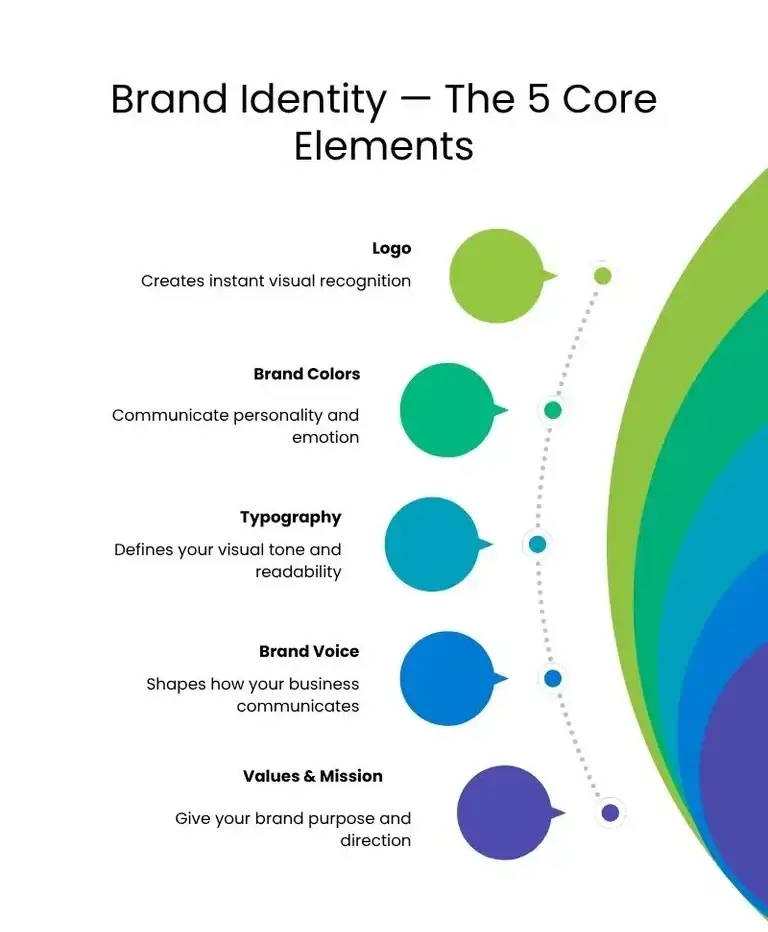
1. Brand Logo
A logo is one of the most recognizable components of a brand identity. It acts as a visual symbol that represents the business.
An effective logo should be:
- Simple and memorable.
- Relevant to the business.
- Professional and visually appealing.
- Adaptable to different sizes and platforms.
For example, a company logo may appear on websites, product packaging, business cards, social media profiles, and advertisements. A well-designed logo helps customers identify the brand quickly.
2. Brand Colors
Colors influence how people perceive a brand and can communicate emotions and personality.
Different colors are often associated with different impressions:
- Blue: Trust, professionalism, and reliability.
- Green: Nature, health, and sustainability.
- Red: Energy, excitement, and passion.
- Black: Luxury, sophistication, and authority.
- Yellow: Optimism, creativity, and positivity.
Choosing a suitable color palette helps a business create a consistent visual appearance. Using the same colors across marketing materials also improves brand recognition.
3. Typography and Fonts
Typography refers to the fonts and text styles used in a brand’s communication.
The right typography can make a brand appear modern, elegant, trustworthy, playful, or professional. Businesses should choose fonts that match their personality and remain easy to read.
For example, a technology company may use clean, modern fonts, while a luxury brand may prefer elegant and sophisticated typography.
Consistency in font selection across websites, brochures, advertisements, and social media designs helps create a unified brand identity.
4. Brand Voice and Messaging
Brand voice is the way a business communicates with its audience through words and language.
A brand’s voice may be:
- Professional and informative.
- Friendly and conversational.
- Bold and confident.
- Creative and energetic.
- Simple and approachable.
For example, a healthcare brand may use a reassuring and informative tone, while a youth-focused fashion brand may use a more casual and energetic style.
A consistent brand voice helps customers understand the personality and values of a business.
5. Brand Values and Mission
A brand identity should communicate what a business believes in and what it aims to achieve.
Brand values represent the principles that guide a company’s decisions and behavior. A mission statement explains the purpose of the business and the value it wants to provide to customers.
For example, a company may focus on:
- Innovation and technology.
- Customer satisfaction.
- Sustainability.
- Quality and reliability.
- Affordable solutions.
Clearly defined values help a business build an authentic identity and connect with customers who share similar expectations.
6. Brand Imagery and Design Style
Images, illustrations, graphics, icons, and photography also contribute to brand identity.
A consistent design style helps customers recognize a business across different marketing channels. Businesses should consider using a unified approach to image selection, graphic design, layouts, and visual presentation.
For example, a premium brand may use clean layouts, high-quality photography, and minimal design elements to communicate sophistication.
7. Customer Experience
Brand identity is not limited to visual design. The way a business interacts with customers is also an important part of its identity.
Customer experience includes:
- Website usability.
- Communication with customers.
- Product packaging.
- Customer support.
- Delivery and service quality.
- In-store or online interactions.
When a business consistently delivers an experience that matches its brand promise, customers are more likely to develop trust and loyalty.
Why Is Brand Identity Important?
A strong brand identity can influence customer perception, marketing performance, and long-term business growth. Here are some of the most important benefits.
1. Builds Brand Recognition
One of the primary benefits of brand identity is improved brand recognition.
When a business uses consistent logos, colors, fonts, messaging, and design elements, customers can identify it more easily. Repeated exposure to these elements helps create familiarity.
For example, customers may recognize a company from its packaging or social media design even before reading its name.
Consistent branding makes a business easier to remember.
2. Creates a Strong First Impression
First impressions matter when customers discover a new business. A professional brand identity can help communicate quality, reliability, and credibility.
A well-designed website, attractive logo, and clear messaging can make a business appear more established and trustworthy.
On the other hand, inconsistent or poorly designed branding may create confusion and reduce customer confidence.
A strong brand identity helps businesses make a positive first impression across digital and offline platforms.
3. Builds Trust and Credibility
Customers are more likely to engage with businesses that appear reliable and professional.
A consistent brand identity demonstrates that a company pays attention to detail and takes its communication seriously. When the visual identity, messaging, and customer experience align, the business can appear more dependable.
Trust is particularly important in industries such as:
- Healthcare and pharmaceuticals.
- Financial services.
- E-commerce.
- Education.
- Professional consulting.
- Technology.
A trustworthy identity can support customer confidence and encourage repeat interactions.
4. Helps a Business Stand Out from Competitors
Many businesses offer similar products or services. A distinctive brand identity can help a company differentiate itself in a crowded market.
For example, two businesses may sell similar products, but one may stand out through its unique design, clear positioning, memorable messaging, and customer experience.
A strong brand identity communicates what makes a business different and why customers should consider it.
Brand identity transforms a business from just another provider into a recognizable brand.
5. Creates an Emotional Connection with Customers
Successful brands often create emotional connections with their audiences.
People do not always make purchasing decisions based only on price or product features. They may also consider a company’s values, personality, reputation, and the feelings associated with it.
A brand identity that reflects customer needs and expectations can help create a sense of familiarity and connection.
For example, a sustainable brand may attract customers who care about environmental responsibility, while a family-oriented brand may emphasize comfort, trust, and reliability.
6. Supports Marketing and Advertising Efforts
Brand identity provides a foundation for marketing campaigns.
When a business has established brand guidelines, its advertisements, social media posts, website content, and promotional materials can maintain a consistent appearance and message.
This helps ensure that customers recognize the same business across different marketing channels.
A strong identity can support:
- Social media marketing.
- Search engine optimization content.
- Google Ads campaigns.
- Email marketing.
- Content marketing.
- Print advertising.
- Video marketing.
Consistent branding can also make marketing materials easier to create because designers and marketers have a clear visual and communication direction.
7. Increases Customer Loyalty
A recognizable and trustworthy brand identity can contribute to customer loyalty.
When customers have positive experiences with a business and connect with its values, they may be more likely to return and recommend it to others.
Brand loyalty is strengthened when a business consistently delivers on its promises and maintains a familiar identity.
However, visual branding alone cannot guarantee loyalty. Product quality, service, customer satisfaction, and reliability remain essential.
8. Supports Business Growth and Expansion
As a business grows, it may introduce new products, enter new markets, or expand its services. A strong brand identity helps maintain consistency during this growth.
For example, a business with clear brand guidelines can introduce new products while keeping its overall visual style and messaging recognizable.
A well-established identity can also make it easier to create partnerships, attract customers in new markets, and communicate a professional image.
9. Improves Employee Alignment
Brand identity is also valuable internally. Employees need to understand what a company represents and how it communicates with customers.
Clear brand guidelines help employees maintain consistency in:
- Customer communication.
- Marketing materials.
- Social media activity.
- Sales presentations.
- Business documentation.
When employees understand the company’s mission and values, they can contribute to a more consistent customer experience.
The Role of Brand Identity in Digital Marketing
Digital marketing has made brand identity more important than ever. Customers interact with businesses through websites, social media, search engines, online advertisements, and email campaigns.
A consistent identity helps businesses create a recognizable presence across these platforms.
Brand Identity and Website Design
A website is often one of the first places where customers interact with a business. Its design should reflect the company’s identity through:
- Brand colors.
- Logo placement.
- Typography.
- Images.
- Layout.
- Tone of content.
- User experience.
A well-branded website can communicate professionalism and make it easier for visitors to understand the business.
Brand Identity and Social Media Marketing
Social media platforms provide businesses with opportunities to build awareness and engage with customers.
Using consistent templates, colors, fonts, imagery, and messaging helps create a recognizable social media presence.
For example, when a business publishes Instagram posts, Facebook advertisements, and LinkedIn content using a similar visual style, audiences can more easily connect the content to the brand.
Brand Identity and SEO
Brand identity also has an indirect relationship with search engine optimization.
A strong brand can encourage people to search for a company by name, recognize its content, and return to its website. These behaviors can support brand awareness and overall digital visibility.
Brand identity can support SEO through:
- Consistent business information.
- Clear website messaging.
- Recognizable branded content.
- Improved user experience.
- Content that reflects the brand’s expertise.
- Stronger brand awareness and branded searches.
However, brand identity does not replace essential SEO practices such as keyword research, technical optimization, useful content, internal linking, and earning relevant backlinks.
Brand Identity and Paid Advertising
Brand identity is especially important in Google Ads, social media advertising, and display campaigns.
A consistent visual identity helps users recognize advertisements and connect them with the business behind the message.
For example, a company can use the same logo, brand colors, messaging style, and design principles across multiple ad campaigns.
This consistency can help create a more professional advertising experience and support brand recall. Nevertheless, advertising performance also depends on factors such as targeting, offer quality, landing-page experience, budget, and campaign optimization.
How to Build a Strong Brand Identity
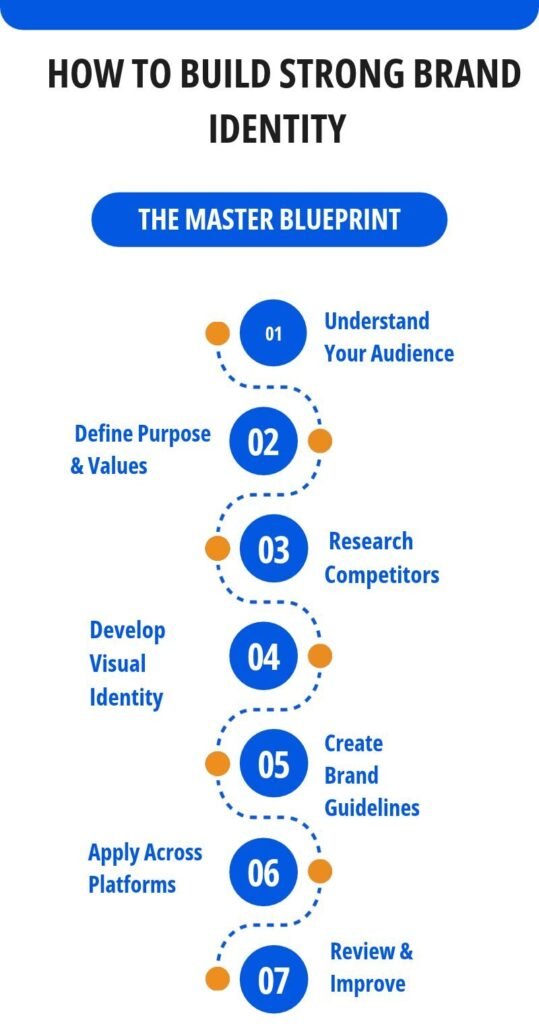
Creating a successful brand identity requires planning, research, and consistency. Businesses can follow these steps to develop an effective identity.
Step 1: Understand Your Target Audience
Before designing a brand identity, identify the people you want to reach.
Consider:
- Who are your ideal customers?
- What are their needs and preferences?
- What problems do they want to solve?
- What influences their purchasing decisions?
- What type of communication do they prefer?
Understanding your audience helps you create a brand identity that feels relevant and meaningful.
Step 2: Define Your Brand Purpose and Values
Determine what your business stands for and why it exists.
Develop a clear mission, define your values, and identify the main benefits you provide to customers.
A clear purpose gives your brand direction and helps maintain consistency in communication.
Step 3: Research Your Competitors
Analyze competing businesses to understand how they present themselves.
Review their:
- Logos and colors.
- Websites.
- Social media presence.
- Advertising messages.
- Product packaging.
- Customer experience.
The goal is not to copy competitors but to identify opportunities to create a distinctive and recognizable identity.
Step 4: Develop Your Visual Identity
Create the main visual elements of your brand, including:
- Logo.
- Color palette.
- Typography.
- Photography style.
- Graphic elements.
- Icons and illustrations.
Make sure the design reflects your brand personality and works well across digital and print formats.
Step 5: Establish Brand Guidelines
A brand guideline document explains how your identity should be used.
It may include rules for:
- Logo usage.
- Color codes.
- Font selection.
- Image style.
- Tone of voice.
- Social media design.
- Advertising layouts.
- Brand spacing and alignment.
Brand guidelines help employees, designers, and marketing teams maintain a consistent identity.
Step 6: Apply Your Identity Across All Platforms
Use your brand identity consistently across every customer touchpoint.
This includes your:
- Website.
- Social media profiles.
- Business cards.
- Packaging.
- Email templates.
- Advertisements.
- Brochures.
- Presentations.
- Customer support communication.
Consistency helps create a unified and professional brand experience.
Step 7: Review and Improve Your Brand Identity
A brand identity should remain relevant as a business evolves.
Collect customer feedback, review marketing performance, and assess whether your identity continues to reflect your business goals.
Businesses may refresh their branding when their target audience, market position, products, or overall strategy changes. However, major changes should be carefully planned to avoid confusing existing customers.
Common Brand Identity Mistakes to Avoid
Many businesses struggle to build a strong identity because they overlook important branding principles.
1. Inconsistent Branding
Using different logos, colors, fonts, or messaging across platforms can create confusion. Maintain consistent brand guidelines wherever your business appears.
2. Copying Competitors
A brand identity should be unique. Copying another company’s design can weaken differentiation and make your business less memorable.
3. Focusing Only on the Logo
A logo is important, but it is only one part of brand identity. Your messaging, customer experience, values, and overall design also matter.
4. Ignoring the Target Audience
A design may look attractive but still fail to connect with the right customers. Always consider your audience’s needs, expectations, and preferences.
5. Changing Branding Too Frequently
Constantly changing brand colors, logos, or messaging can make it difficult for customers to recognize your business. Make changes strategically and maintain continuity where possible.
6. Making False Brand Promises
A brand should communicate honestly. If a business promises premium quality, fast service, or exceptional support, it should work to deliver those expectations.
Brand Identity vs. Brand Image vs. Brand Awareness
These three branding concepts are related but have different meanings.
| Concept | Meaning |
|---|---|
| Brand Identity | How a business presents itself through visuals, values, messaging, and experiences. |
| Brand Image | How customers and the public perceive the business. |
| Brand Awareness | How familiar customers are with a brand and whether they recognize or remember it. |
For example, a company may create a premium brand identity, but if customers experience poor service, its brand image may become negative. Similarly, a business may have strong brand awareness but a weak or inconsistent identity.
A successful brand works to align its identity with the experience it delivers.
How to Measure the Success of Brand Identity
Brand identity can be evaluated through a combination of qualitative and quantitative indicators.
Businesses may monitor:
Brand Recognition
Do customers recognize your logo, colors, or advertisements?
Customer Feedback
Do customers describe your brand in the way you intended?
Branded Search Traffic
Are more people searching for your business name or branded products?
Social Media Engagement
Are audiences interacting with and sharing your branded content?
Customer Retention
Are customers returning to your business and recommending it to others?
Marketing Performance
Are your campaigns generating meaningful engagement, leads, or sales?
These metrics should be interpreted alongside product quality, pricing, customer experience, and other business factors.
Conclusion
Brand identity is a fundamental part of building a successful and recognizable business. It goes beyond creating an attractive logo or selecting brand colors. It represents the combination of visuals, messaging, values, and customer experiences that communicate what a business stands for.
A strong brand identity helps improve recognition, build credibility, differentiate a business from competitors, support marketing efforts, and create meaningful customer relationships.
In the digital age, businesses must maintain a consistent identity across websites, social media, search engines, advertisements, and every other customer touchpoint.
Whether you are starting a new business or improving an existing one, investing in a clear and authentic brand identity can help establish a strong foundation for long-term growth.
A memorable brand is not just seen—it is recognized, trusted, and experienced.
Frequently Asked Questions (FAQs)
1. What is brand identity in simple words?
Brand identity is how a business presents itself to customers through its logo, colors, fonts, messaging, values, and overall customer experience.
2. Why is brand identity important?
Brand identity helps businesses become recognizable, build trust, stand out from competitors, communicate their values, and create a consistent customer experience.
3. What are the main elements of brand identity?
The main elements include logo, colors, typography, brand voice, imagery, brand values, mission, and customer experience.
4. How does brand identity help digital marketing?
Brand identity helps businesses maintain consistency across websites, social media, SEO content, and paid advertisements. This can improve recognition and support a more professional online presence.
5. Can small businesses benefit from brand identity?
Yes. Small businesses can use a clear and consistent brand identity to appear professional, differentiate themselves from competitors, and build customer trust.
6. What is the difference between brand identity and brand image?
Brand identity is how a business wants to present itself, while brand image is how customers actually perceive it.
7. How often should a business update its brand identity?
There is no fixed schedule. A business should review its brand identity when its goals, audience, market position, or services change significantly. Minor improvements can be made when needed.